
Students
From Finding His Place to Building What Comes Next: Will Cutshall’s Transformation
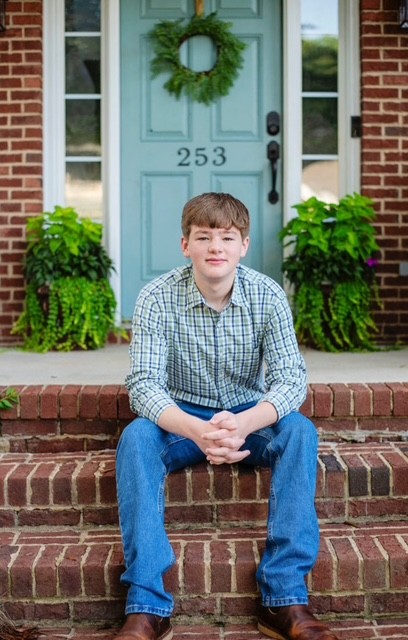
Will Cutshall once struggled to find his place in a traditional classroom. Today, he is a straight-A student, a leader in his school community and the founder of a 3D-printing club that helps other students explore technology.
The difference was not a sudden discovery that Will had potential. That potential was there all along. At the SC Governor’s School for Agriculture at John de la Howe, he found an environment that helped him recognize it—and the encouragement to put it to work.
His story offers a personal answer to a much bigger question: Who will carry agriculture forward?
It Started With Someone Who Saw Possibility
In elementary and middle school, Will found it difficult to stay engaged, complete tasks and invest in his grades. He had not yet discovered what he could achieve. The disruption of the pandemic added another challenge to an already difficult chapter.
Then he met Miss Nan Dempsey, a fellow parishioner at his church and a lifelong educator who had helped shape the school’s curriculum. A passionate advocate for STEM and students who learn differently, she encouraged him to try the school’s Aggie Adventure Camps.
Will attended for two summers. Through hands-on activities, he discovered how much he enjoyed understanding how things work, exploring new ideas and solving problems. What began as an opportunity to try something different became a genuine interest in STEM.
Struggling in one classroom, he began to understand, did not mean he was incapable of succeeding in another.
A New Environment. A New Sense of Himself.
After camp, Will chose to enroll at the SC Governor’s School for Agriculture in tenth grade. At fifteen, he left home to live two hours from his family and take on a rigorous, STEM-focused agricultural curriculum.
It was a significant adjustment. It was also an opportunity to grow academically, personally and socially. He discovered that he could do more than he had previously believed—and developed a particular interest in engineering.
His science teacher, Mrs. Pickren, helped reinforce that discovery. Having taught him science twice, she recognized his understanding of scientific concepts and his natural approach to problems. Like Miss Nan, she encouraged his strengths rather than letting his earlier struggles define him.
Their belief helped Will build belief in himself.
From Curiosity to Leadership
Today, Will describes himself as a straight-A student who actively looks for ways to contribute. He has participated in nearly every club at the school and taken on several leadership roles.
He also started a 3D-printing club, teaching other students how to use the equipment and creating a community around a shared interest in technology. A student who once had difficulty finding his own place is now helping others find theirs.
That is a transformation measured in more than grades. It is confidence, initiative and the willingness to bring other people along.
Looking Toward Clemson—and a Future in Engineering
Will once imagined becoming a large-animal veterinarian. As he explored STEM, he discovered that what excited him most was working through challenges step by step and understanding why things work the way they do.
Engineering brings those interests together. His goal is to graduate from John de la Howe in 2027 and continue his education as an engineering student at Clemson University.
Clemson has long been part of his family’s story: both parents are graduates, and his sister is a student there. But Will’s ambition is now his own. He wants to take on challenging coursework, learn alongside people who share his interests and discover areas of engineering he has not yet explored.
That next chapter is an aspiration, not an admission announcement. What is already clear is the preparation he carries with him: learning to adapt, ask for help, work hard and keep going when something does not come easily.
Why His Story Matters to Agriculture’s Future
Agriculture needs more than a new generation willing to farm. It also needs people who can understand complex systems, improve equipment, use technology thoughtfully and solve practical problems.
The urgency is real. The USDA’s 2022 Census of Agriculture reported an average U.S. farmer age of 58.1. American Farmland Trust found that 11 million acres of agricultural land were paved over or converted to uses that threaten agriculture between 2001 and 2016—roughly 2,000 acres a day averaged over that period, not a current daily rate.
Those challenges call for capable people as well as new ideas. Engineering can contribute to more efficient machinery, water management and technologies that help producers make better use of the land and resources available to them.
Will has not yet chosen his engineering specialty, and his story is not a promise of a particular agricultural invention or career. It demonstrates something more foundational: hands-on agricultural education can help a young person discover the confidence and problem-solving skills that our future needs.
The food we eat, the land we care for and the communities agriculture sustains all depend on people prepared to learn, lead and innovate. That preparation begins long before a college degree or a first job.
Help the Next Student Discover What Is Possible
Will’s transformation began with encouragement, an invitation to camp and an environment where learning came alive. Teachers, mentors and a supportive community helped him turn curiosity into direction.
The John de la Howe School Foundation raises funds to expand the student opportunities that make this kind of growth possible: hands-on learning, educational resources, leadership experiences and scholarships. His story does not attribute his progress to a particular gift. It shows why investing in opportunities for students matters.
Potential is everywhere. Opportunity changes everything.
Explore ways to give, learn about academic pathways and programs, or talk with our team about helping another student discover what comes next.
Adapted from Will Cutshall’s personal essay, “Why Clemson Is My Home,” supplied to the Foundation. Educational experiences and future plans are presented as described in that reference.


